
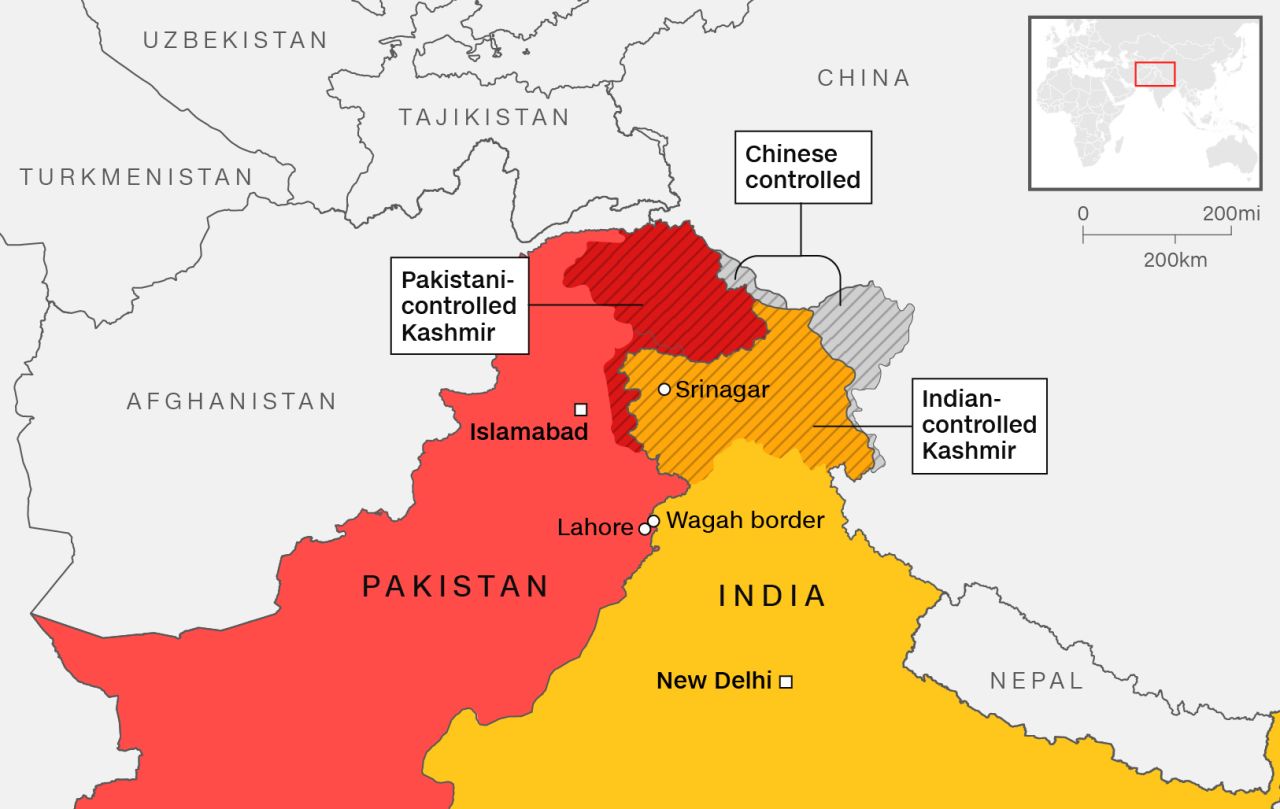
India has rejected the newly constituted Pakistan China boundary commission, saying the body has no legal basis to make arrangements involving territory that New Delhi regards as Indian land under illegal occupation.
The Ministry of External Affairs issued the response after the Pakistan–China Boundary Joint Commission held its first meeting in Islamabad. The Indian position was reported on September 17 by The Indian Express, Hindustan Times and other national outlets, while the ministry published its response to media queries on its official website.
India’s position on the Pakistan China boundary commission
Ministry spokesperson Randhir Jaiswal said India rejects the “so-called Joint Commission” and maintains that no lawful boundary exists between Pakistan and China in the disputed territory. The statement reiterates New Delhi’s longstanding objection to the 1963 China–Pakistan boundary agreement.
India says Pakistan’s transfer of territory in the Shaksgam Valley to China under that agreement was illegal and invalid. New Delhi regards Jammu and Kashmir and Ladakh in their entirety as integral parts of India and says bilateral arrangements made by Pakistan and China cannot alter that position.
These are the Indian government’s territorial and legal claims. Pakistan and China maintain different positions, and the boundary commission was established by those two governments. The Indian statement does not represent an internationally adjudicated settlement of the competing claims.
Why Shaksgam Valley is central to the dispute
The Shaksgam Valley lies in a strategically sensitive area north of the Karakoram range. Pakistan transferred control claimed over the area to China through the 1963 agreement, subject to provisions connected with a future settlement of the Kashmir dispute.
India has never recognised that agreement. The latest response repeats rather than replaces this established policy, but it was prompted by the commission’s first meeting and any attempt by Pakistan and China to institutionalise boundary cooperation in the area.
The Indian Express reported that New Delhi considers the commission unable to determine arrangements concerning territory India says is occupied unlawfully.
Connection with the China–Pakistan Economic Corridor
The statement also restated India’s opposition to the China–Pakistan Economic Corridor. Parts of the corridor pass through Pakistan-administered Kashmir, territory claimed by India.
New Delhi has consistently objected to infrastructure and economic projects in the area on sovereignty grounds. China and Pakistan describe the corridor as a bilateral development initiative, while India argues that projects traversing the disputed region disregard its territorial claims.
The latest statement links the new boundary mechanism to that wider dispute. It does not announce sanctions, military action or a new diplomatic negotiation. Its immediate purpose is to place India’s rejection of the commission and the 1963 agreement on the public record.
What has changed and what has not
The new development is the first meeting of the Pakistan–China Boundary Joint Commission and India’s direct public response. India’s underlying claims regarding Shaksgam Valley, Jammu and Kashmir, Ladakh and the economic corridor remain unchanged.
No joint response from Pakistan and China to India’s September statement was included in the reviewed reports. Any subsequent reply should be treated as an additional development rather than retroactively inserted into the current account.
For now, the verified position is that the commission has begun meeting, India rejects its legal standing, and the three countries’ competing territorial positions remain unresolved.

