
Draft — image required.
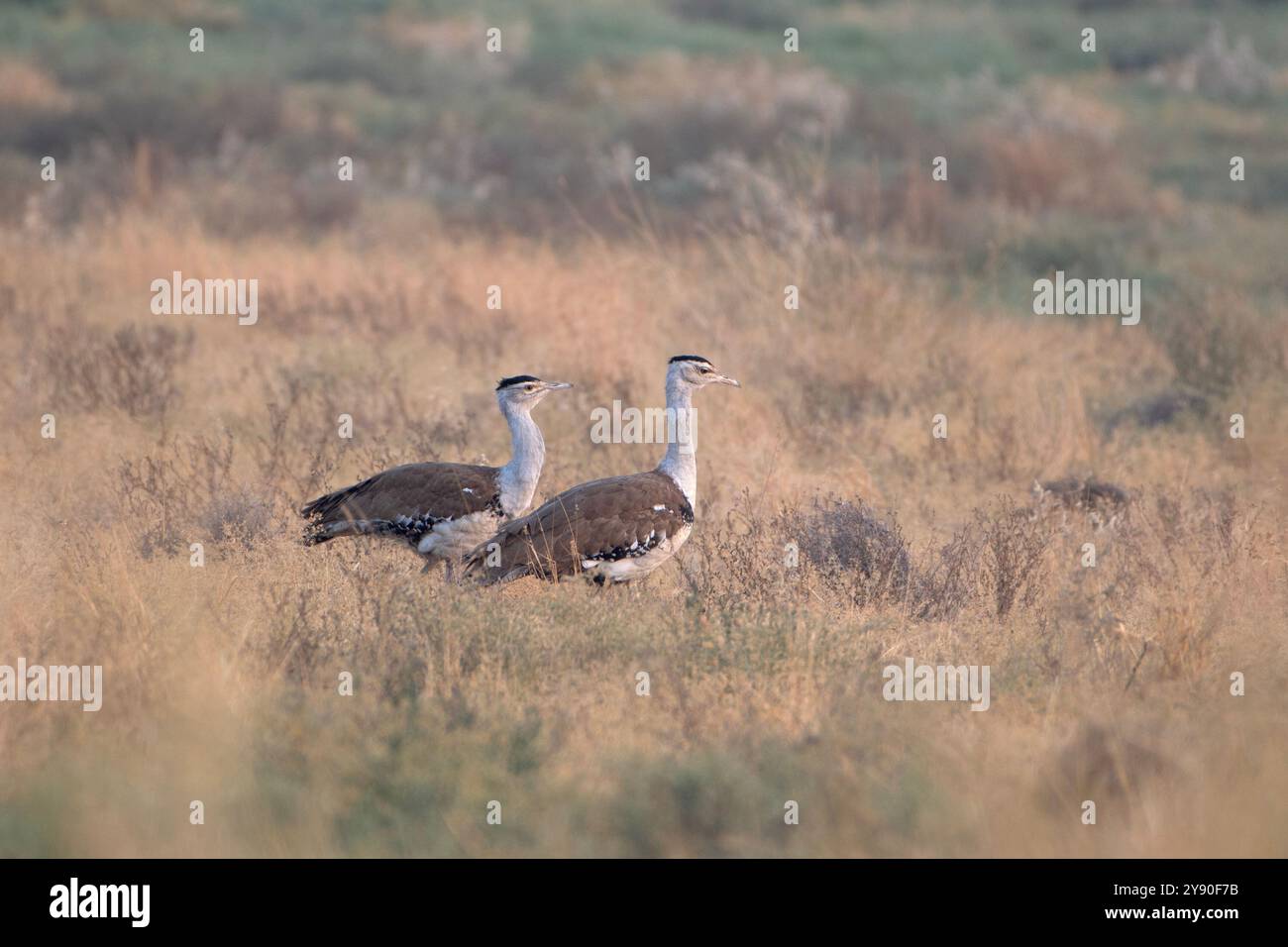
Two captive-bred male Great Indian Bustards were released into the wild at Rajasthan’s Desert National Park on Sunday, October 4, marking the first operational step in a new rewilding phase for one of India’s most threatened birds. The Great Indian Bustard release took place at Sam in Jaisalmer under the national recovery programme.
Great Indian Bustard release begins rewilding phase
Union Environment Minister Bhupender Yadav and scientists from the Wildlife Institute of India participated in the release. The birds had been raised through conservation-breeding work at facilities in Sam and Ramdevra.
The Environment Ministry described the exercise as a transition from building a viable captive population towards adding birds back to their natural habitat. It said scientists will use observations from this pilot to refine the protocols for later releases.
The ministry reported that the two facilities currently hold 97 birds: 40 originating from eggs collected in the wild and 57 bred in captivity. Of the total, 86 are being retained for captive reproduction and 11 were earmarked for release. Two of those 11 have now entered the wild.
Why the release matters
The Indian Express reported that only about 150 Great Indian Bustards remain in the wild. That estimate helps explain why the release is being treated as a closely managed scientific trial rather than a large-scale restocking effort.
Captive reproduction produced 24 live chicks in 2025 and 29 in 2026, according to both the ministry and The Indian Express. Scientists have also tested a “jumpstart” approach in which captive-laid eggs are placed in wild nests. The ministry said that method contributed to six hatchings in Rajasthan and two in Gujarat.
The Bustard Recovery Programme brings together the Union Environment Ministry, Rajasthan Forest Department and Wildlife Institute of India, with technical collaboration from the International Fund for Houbara Conservation and funding from National CAMPA.
Habitat protection remains central
Breeding alone cannot secure the species’ future. The Rajasthan Forest Department has created about 200 square kilometres of fenced grassland enclosures inside the Desert National Park. Long-term telemetry studies identified those areas as important breeding habitat.
Researchers will now monitor how the released birds adapt, move and use the landscape. The result will influence when and how the remaining birds selected for release are introduced.
This story was selected for national conservation significance and current editorial prominence. Google Trends India did not surface a usable verified search-volume figure for the event, so no trend ranking is claimed.

