
The Kanya Pujan 2026 date has caused confusion because the Ashtami tithi spans October 18 and October 19. For New Delhi, Drik Panchang places Saptami until 8:27 AM on Sunday, October 18, after which Ashtami begins. Ashtami then continues until 10:51 AM on Monday, October 19.
That overlap means both dates appear in festival guides. However, publications applying the traditional Udaya Tithi principle—the lunar date present at sunrise—identify Monday, October 19, as the principal Maha Ashtami observance in Delhi and many parts of north India.
Kanya Pujan 2026 date depends on tradition
Kanya Pujan is commonly performed on Ashtami or Navami, depending on family, regional and sampradaya traditions. Devotees who perform the ritual specifically for Maha Ashtami may prefer the morning of October 19 because Ashtami is present at sunrise and lasts until 10:51 AM.
Other families traditionally worship on Navami. Navami begins after Ashtami ends on October 19 and continues into October 20. Those following Udaya Tithi for Navami may therefore observe Navami rituals on October 20. Local temple calendars can differ, particularly in eastern and southern India, so devotees should check the panchang for their city.
This distinction is important: a national calendar cannot replace a location-specific panchang because sunrise and tithi timings change by place. A family priest or established local temple remains the best guide where a household follows a specific tradition.
Why October 18 also appears in festival calendars
Some calendars associate October 18 with the beginning of Ashtami after the morning transition from Saptami. The evening and night therefore fall within Ashtami tithi. Certain Shakta and tantric traditions give special importance to night worship, while morning Kanya Pujan is often linked to the sunrise-based festival day.
Regional Durga Puja practice also follows its own ritual sequence. Bengali almanac reporting, for example, places key Maha Ashtami observances and anjali according to puja-specific timings that may not match simplified nationwide festival lists.
What the ritual represents
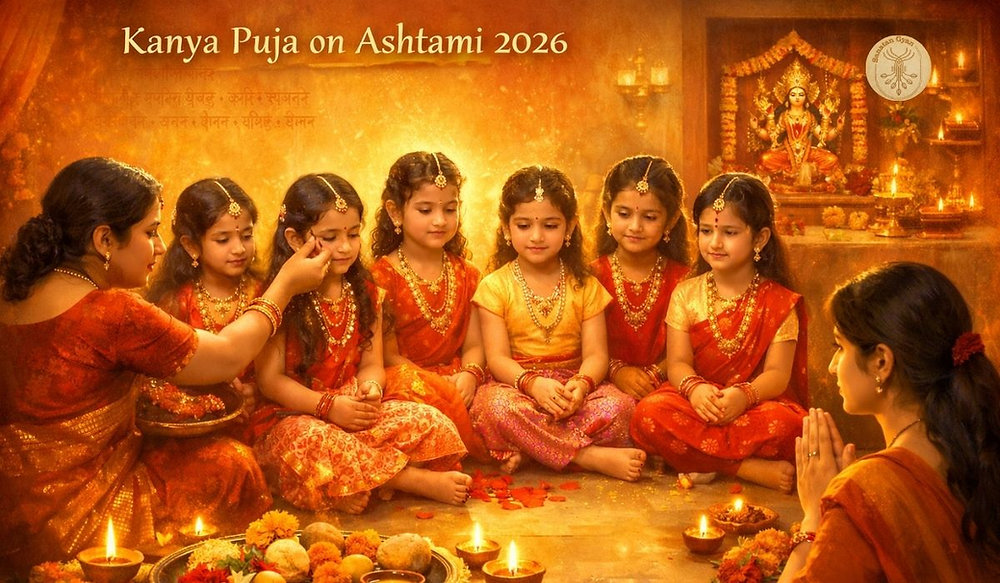
During Kanya Pujan, young girls are welcomed and honoured as symbolic manifestations of the Goddess. Families commonly wash their feet respectfully, offer tilak, serve food and give a small gift or dakshina. The familiar meal of halwa, puri and black chickpeas is customary in many north Indian homes, though menus vary by region.
The ritual should centre on respect and consent. Children should be invited through their parents or guardians, accommodated comfortably and never pressured to participate. Hygiene and dietary restrictions should also be considered when preparing food.
Practical guidance for devotees
For households in Delhi following Maha Ashtami and Udaya Tithi, the morning of October 19 is the clearest choice, before Ashtami ends at 10:51 AM. Devotees following an inherited family practice on October 18, or those performing Navami Kanya Pujan, can continue their established tradition after confirming local timings.
No verified Google Trends volume was available for this topic during the batch snapshot. The story was selected for its immediate public utility and widespread editorial prominence, not a claimed search ranking.

