
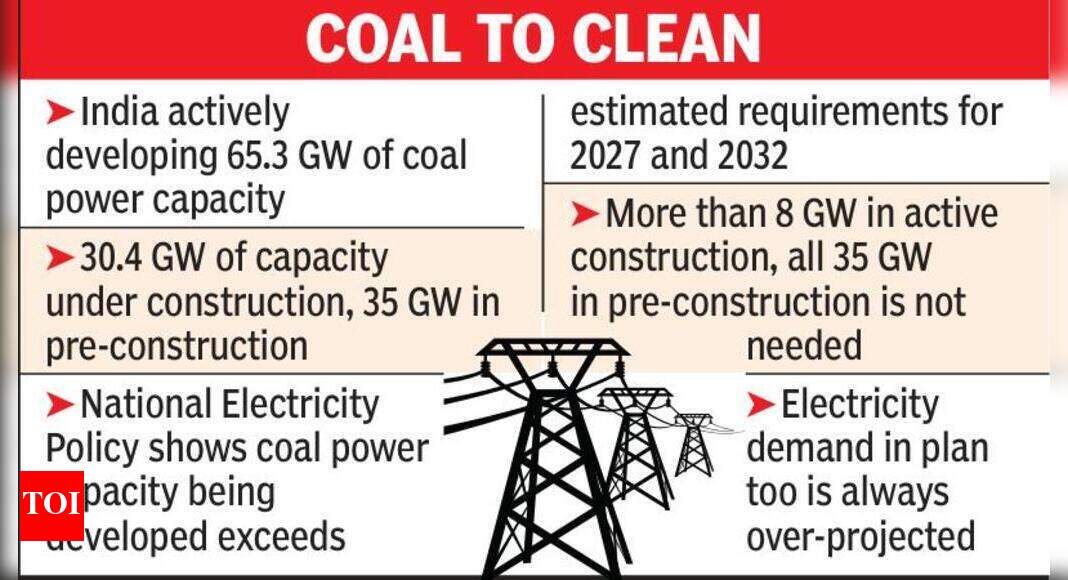
India may need to add substantially more coal-fired generation by 2035 than previously planned as electricity demand rises faster than expected, according to Central Electricity Authority (CEA) chairperson Ghanshyam Prasad. The assessment puts India coal power capacity at the centre of a broader debate about reliability, renewable-energy integration and long-term investment.
Speaking at the Indian Chamber of Commerce’s India Energy Summit on Tuesday, October 13, Prasad said the additional coal-based capacity requirement could rise to between 105 gigawatts (GW) and 150 GW. That compares with an earlier plan to add 97 GW and reach about 307 GW of coal capacity by 2035. India currently has roughly 230 GW.
The higher range is a planning estimate voiced by the head of the CEA, not a newly approved government target. Any expansion would still require project-level approvals, financing, land, fuel arrangements and transmission infrastructure.
Why India coal power capacity estimates are rising
Prasad linked the reassessment to an unusually sharp increase in electricity use and weaker hydropower generation. Daily peak demand this year has been running about 45–50 GW above the year-earlier level, according to reports of his remarks.
Government data cited by Reuters showed that India’s electricity shortfall reached 560 million kilowatt-hours in September, the highest monthly deficit since August 2023. Coal-fired generation increased 13.3% from a year earlier during the month, while hydropower output fell 20%.
The Indian Express separately reported that coal generation between April and August rose to 579,869.38 million units, nearly 10% above the comparable period last year. Hydropower generation over the same period fell by more than 11% to 75,304.58 million units.
Those figures help explain the CEA’s concern about “firm” or dispatchable supply—power that can be called on when solar and wind output is low. Coal plants currently perform much of that role, although nuclear generation, pumped-storage hydro and batteries can also support the grid.
The estimate sits alongside a large renewable build-out
The coal outlook does not mean India has halted its renewable-energy expansion. Prasad said the country added about 50 GW of renewable capacity last year and expects annual additions above that level to continue.
An August 2026 government response in Parliament said the official programme then envisaged a minimum 105 GW of additional coal and lignite capacity to meet a projected 315 GW requirement by 2035–36. It also listed 147,720 MW of renewable capacity under construction and major programmes for pumped storage and battery energy storage.
This mix matters because installed capacity alone does not show when electricity is available. Solar output is concentrated in daylight hours, wind production varies by location and season, and weak rainfall can reduce hydropower. Storage, flexible demand and stronger transmission can shift or move clean electricity, while firm generators cover longer gaps.
What happens next
The upper estimate of 150 GW would represent a substantial revision and is best treated as a signal that India’s planners are stress-testing their assumptions. A formal change would need to appear in updated national plans and project pipelines.
The central policy question is therefore broader than coal versus renewables. India must meet rapidly growing demand while controlling costs, maintaining grid stability and limiting emissions. The eventual capacity mix will depend on demand forecasts, the pace and price of storage, transmission upgrades, plant efficiency and the availability of nuclear and pumped-storage projects.

