
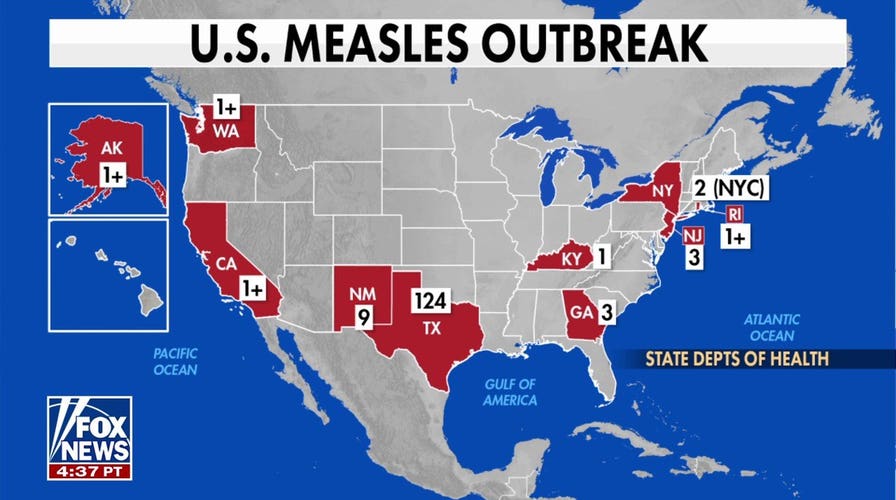
The United States recorded 3,134 confirmed measles cases in 2026 through September 3, according to the Centers for Disease Control and Prevention. The US measles cases 2026 total is the country’s highest annual count in more than three decades.
The CDC said 3,118 cases were reported by 47 US jurisdictions and 16 involved international visitors. These figures are provisional and can change as health departments complete investigations and reconcile records.
US measles cases 2026 are mostly outbreak-associated
Ninety-five percent of confirmed cases—2,969 of 3,134—were linked to outbreaks. The CDC listed 38 newly reported outbreaks during 2026, in addition to cases associated with outbreaks that began in 2025.
For comparison, the CDC recorded 2,289 confirmed cases in all of 2025, with 90% connected to outbreaks. Comparisons must use the dates stated because the 2026 count covers only the year through early September.
Why measles spreads quickly
Measles is a highly contagious respiratory virus. An infected person can spread it before the characteristic rash is visible, complicating detection and allowing exposure in households, schools, healthcare settings and public spaces.
The CDC says two doses of the measles, mumps and rubella vaccine provide the best protection. Communities with lower vaccination coverage can sustain outbreaks after an imported case introduces the virus.
What the data do not show
The national total does not mean every jurisdiction faces the same level of transmission. Cases and outbreaks are unevenly distributed, and local health-department information is necessary for community-specific guidance.
A confirmed case count also differs from the number of people exposed, quarantined or under investigation. Probable cases may be reported locally but are not included in the CDC’s confirmed national total until they meet its reporting criteria.
People who suspect exposure should contact a healthcare provider or local public-health authority before arriving unannounced at a clinic, which can help prevent additional exposure. The CDC’s weekly updates remain the authoritative source for the evolving national count.

