
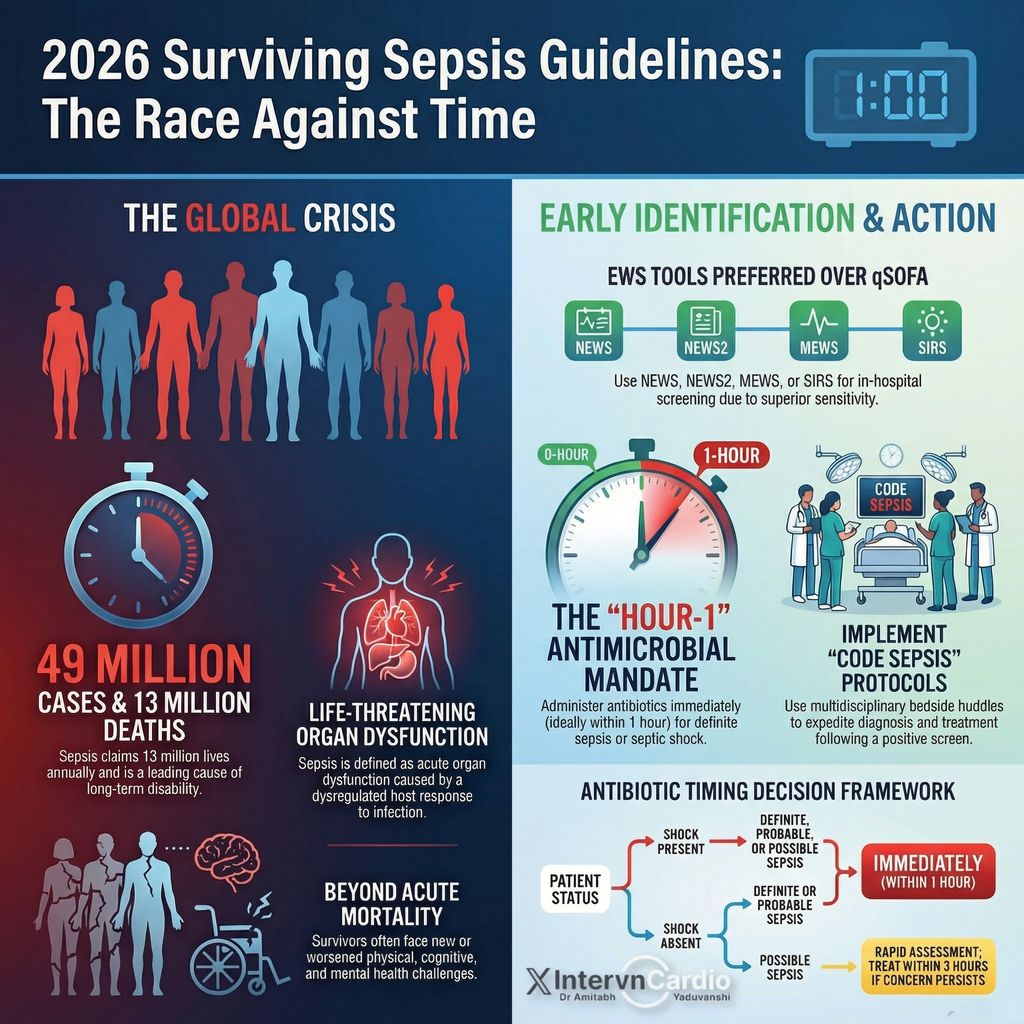
World Sepsis Day is being observed on September 13, 2026, with a campaign calling for investment in infection prevention, earlier recognition and better care. The Global Sepsis Alliance’s message, “Invest in Sepsis – Save Lives,” places attention on the health services and trained staff needed to respond before a patient deteriorates.
For readers in India, the central clinical message is the same as elsewhere: sepsis is a medical emergency. The World Health Organization and the US Centers for Disease Control and Prevention both describe it as an extreme response to infection that can damage organs and become life-threatening without prompt treatment.
World Sepsis Day puts prevention and care in focus
The organisers’ September 13 announcement calls on governments, researchers, funders, health professionals and communities to support prevention, diagnosis and treatment. It follows a global webinar held on September 9, bringing together sepsis specialists, survivors and families.
The campaign is an awareness initiative, rather than an announcement of a new medicine or a change to treatment guidelines. Its emphasis on stronger health systems sits alongside established WHO guidance that early recognition and appropriate clinical management improve the chance of survival.
Warning signs need urgent medical attention
WHO and CDC list confusion, breathing difficulty, severe pain, clammy skin and a fast heart rate among possible warning signs. Fever, shivering or feeling unusually cold can also occur. Someone with suspected sepsis should receive urgent medical assessment.
These signs do not provide a diagnosis by themselves. CDC explains that healthcare professionals assess the patient and may use tests to identify infection or organ damage. A checklist on a website cannot establish the cause of an illness or replace that assessment.
Both organisations say bacterial infections cause many cases, while viral and fungal infections can also lead to sepsis. The condition concerns the body’s harmful response to infection, with potentially serious consequences for its own tissues and organs.
Reducing risk starts with preventing infection
Good hygiene and infection prevention are shared priorities in WHO and CDC advice. WHO also highlights recommended vaccinations, safe water and effective infection-control practices in hospitals and clinics. These measures reduce opportunities for infections that may progress to sepsis.
People with weakened immune systems or existing health conditions can be particularly vulnerable, although anyone can develop sepsis. Recognising deterioration matters even when the original infection initially appears manageable.
Treatment is a clinical decision. The agencies emphasise prompt appropriate therapy and support for circulation where required. Antibiotic choice should be guided by clinicians; antimicrobial resistance can make infections harder to treat.
Awareness should lead to timely action
This year’s observance connects public knowledge with investment in staff, diagnostics, research and reliable access to care. For families, its most immediate practical value is recognising that a worsening infection accompanied by concerning symptoms deserves urgent attention. For health systems, the campaign asks that early recognition and treatment be supported throughout the year.

