
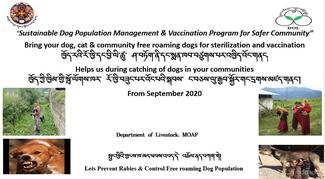
The World Health Organization has validated Bhutan’s elimination of dog-transmitted human rabies as a public health problem, making it the first country in WHO’s South-East Asia Region to reach the milestone.
WHO announced the validation on September 4, 2026. Bhutan has maintained zero human deaths from dog-mediated rabies since June 2023, according to the organisation.
What Bhutan rabies elimination means
Elimination as a public health problem is a defined public-health achievement supported by evidence reviewed through WHO’s validation process. It does not mean the rabies virus has disappeared everywhere or that prevention can stop.
Rabies can be maintained in animal populations and can reappear through cross-border movement or gaps in vaccination. Continued surveillance, dog vaccination and rapid access to post-exposure care remain necessary.
A One Health approach
WHO credited more than a decade of coordinated work involving human-health services, veterinary authorities, communities and other sectors. This One Health model recognises that preventing human rabies depends heavily on controlling transmission in dogs.
Key measures typically include mass dog vaccination, monitoring animal cases, managing bite incidents, laboratory confirmation and ensuring that exposed people receive appropriate post-exposure prophylaxis.
Why the regional milestone matters
Dog-mediated rabies remains a major concern in parts of Asia, including India. Bhutan’s achievement offers a regional example of how sustained vaccination and coordination can interrupt human deaths.
The country’s smaller population and geography differ from those of larger neighbours, so its programme cannot simply be copied without adaptation. However, core principles—reliable surveillance, high dog-vaccination coverage and prompt treatment—are broadly relevant.
Validation is not eradication
Public-health terms matter. Eradication means permanent worldwide reduction to zero, while elimination refers to reducing a disease or transmission pathway below a defined threshold in a specific area.
WHO’s wording is therefore precise: Bhutan has eliminated dog-transmitted human rabies as a public health problem. It still needs systems capable of detecting and responding to imported or animal cases.
What comes next
Maintaining the milestone will require financing, vaccine availability, laboratory capacity and cooperation with neighbouring areas. Monitoring stray and free-roaming dog populations will remain part of prevention.
Bhutan’s experience also supports the global goal of ending human deaths from dog-mediated rabies. The achievement shows that progress is possible when animal and human health programmes work together over many years.

