
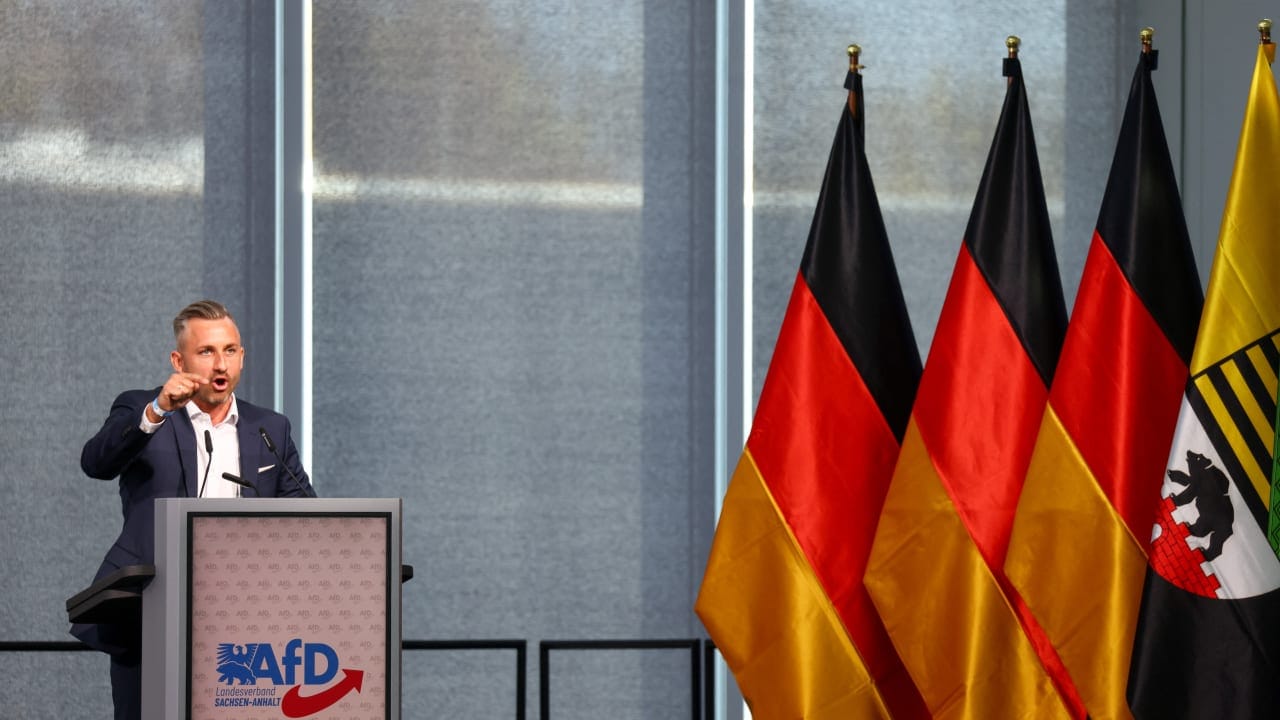
Germany’s Alternative for Germany party is seeking an unprecedented state-level breakthrough in Saxony-Anhalt, where voters will elect a new parliament on September 6.
AfD leads, but governing is another question
Recent surveys put the AfD above 40%, well ahead of the governing Christian Democratic Union. Its candidate, Ulrich Siegmund, is campaigning on immigration, national identity and dissatisfaction with the federal government.
Winning the largest vote share would not automatically make Siegmund state premier. Most other parties reject cooperation with the AfD, so the outcome will depend on whether they collectively hold enough seats to assemble or support an alternative government.
How seats are decided
Saxony-Anhalt uses a mixed electoral system combining constituency winners with proportional allocation. The parliament has a statutory minimum of 83 seats, but balancing mandates can increase the final total. Parties generally need at least 5% of second votes to qualify for proportional seats.
Polling close to the threshold for smaller parties could therefore change coalition arithmetic substantially. Reuters identified a possible CDU-led minority administration supported informally by the Left as one scenario, although such an arrangement would be politically difficult.
National significance
An AfD-led state government would be the party’s first and could influence later elections in Berlin and Mecklenburg-Vorpommern. It would also test cooperation between a state administration and federal institutions on security, education and migration.
Polls describe voter intentions, not results. Turnout, late movement and constituency outcomes will determine the composition of the Landtag after voting closes.

